New key art, character visuals, and second PV for the anime “BLACKFOX” can also be found on its website.
-Synopsis-
“Among the skyscrapers at night, a phantom stands atop a building, with the face of a black fox. Dubbed as an urban legend due to its appearance in video sites, people have come to call the monster “Black Fox.”
It doesn’t make us go crazy. We just don’t understand the why. No one has ever satisfactorily explained why bagged milk is better than milk in jugs.
There is no literal reason since the jugs we use are just as cheap as bags and with a bag you need to put it into something as soon as it’s opened because otherwise you’re crying over spilt milk
I don’t understand why y’all use jugs though. They’re so impractical.
No they’re not. You have a self contained stand able container.
With a bag you have one floppy boi
We have holders for that. There’s no real difference.
Wouldn’t it be crazy if there was a way you could hold milk without grabbing a separate holder? Some sort of solid plastic or cardboard container, that would be so cool.
Then there are Soviet milk pyramids. Those are the oddest milk containers of all but they’re really cool.
Thanks! That’s horrible! Curse you for sharing!
i want a Soviet milk pyramid
[ wording it up down here but I’m here to say that there are multiple reasons to use bagged milk over cartons or jugs, not the least of all being that they’re individually easier to dispose of, take up less room in trash, and are far easier and more cost effective to recycle. More than that, bagged milk is easier to transport, and presents far less wasted space than rigid containers, but because bagged milk is typically sold in sets of three within a larger bag, more milk goes unspoiled before consumption because rather than buying a big-ass jug that gets contaminated, ruined, and thrown out, if there’s a problem with the current bag, you only lose 1/3 of the milk you paid for.
That triangular carton is new to me though, thanks I hate it ]
…dare I say veterans being the public image of PTSD in america is deliberate propaganda to make us sympathize with soldiers who kill people overseas ? way more women have PTSD than men, and a lot have it from sexual and domestic violence, not combat.
So here’s the thing. The reason the ‘public image of PTSD in america’ is veterans has a lot more to do with history (both past and current) than anything else.
Humans are not very good at sussing out cause from effect. It’s not immediately obvious that the constellation of symptoms we call PTSD is a constellation. Sure, some of it is immediately obvious- of course if you got in a car accident you’d be scared of shoddy driving afterwards- but some of it (aggression, memory issues, fatigue) doesn’t have anything obvious to do with I Had A Traumatic Thing Happen And Things Are Bad Now.
If you don’t know that trauma can cause damage to your brain on a small-scale level, it’s easy to blame the symptoms of PTSD on the thing that is causing the PTSD. “Alice has been so moody since she broke up with her [creepy, rapey] boyfriend.” “Ozma hasn’t ever been the same since her husband died. It’s sad when someone’s widowed so young.”
“Poor Jenny married that terrible man, it’s so sad how much he’s ground her down.” And if you’re living in a time and place where most people are suffering many small traumas – say, most of human history- it’s easy to write the symptoms of PTSD off as just Part Of Growing Up.
…Now here’s the rub. If you send a perfectly healthy, happy 20-something-year-old off to war, and they Come Back Different, it’s a lot easier to notice. You’re not seeing the things that caused their PTSD on a day to day basis; you’re seeing the Before and After, like shitty gym photographs. And if you send an entire town’s worth of healthy, happy 20-somethings off to war, and most of them don’t come back at all and the ones who come back Come Back Different… even the most vehemently pro-abuse assholes in this world will notice that something is deeply, deeply wrong.
We discovered that PTSD exists because of the World Wars – particularly World War One. We discovered that there is a chronic condition that is the result of seeing too many atrocities because basically an entire generation of young (European) men died and even the most asshole-y of assholes couldn’t explain it away. These were Good Brave Young Men going off to Serve Their Country ™, they hadn’t been weak or foolish or ‘done’ anything to bring shell shock down on themselves, and the difference between them before and after shell shock set in was like night and day. It was pretty much the frictionless-cows-in-a-vaccuum situation for ‘proving’ that PTSD exists.
Time went on, scientists properly started studying this stuff, and they figured out that PTSD was the same phenomenon regardless of whether it was caused by a year on the front lines or fifteen years of marital rape. Because- let me reiterate- it’s not immediately obvious that it’s the same thing. Once they figured it out, yeah, in hindsight it’s bloody obvious that more women have PTSD than men and that rape/abuse/miscarriage/etc. have a lot to do with that.
But because of the early years when PTSD was equated to shell shock, most people still associate the two. And most older people in America will particularly equate the two because Vietnam. Yeah, some of the ‘Vietnam Vets With PTSD’ thing was probably overblown in the interest of sensationalism (whether to sentimentalize Those Poor Veterans or to fearmonger against Those Scary Violent Poor People).
But the thing is… Vietnam was the first time since WWI that we’d had that Spherical Cows In A Vacuum situation, at least in the USA. It was the first time we’d had a war that was big enough to suck in an entire generation, that was ugly enough to fuck up an entire generation- that was also unpopular enough that people felt safe saying that they’d gotten fucked up from it.
If you were a WWII veteran, you couldn’t really say ‘the war was a stupid pointless hell and I wish we’d never fought it’ Because Nazis. Hell, even if you’d fought in the Korean War, you couldn’t really say “the war was a stupid pointless hell and I wish we’d never fought it’ Because Commies. You were doing the right thing. You were Making The World Safe For Democracy. Saying anything else was wrong. But Vietnam was unpopular enough that there were plenty of places where you could say “hey, the war sucked, it fucked me up, I wish I’d never gone” and people would agree with you.
So for a lot of Baby Boomers and older Gen Xers, their first experience with PTSD was their dads or uncles or brothers, or their friends’ dads or uncles or brothers, coming back from Vietnam and coming back all fucked up. And then the TV talking about veterans with PTSD. And then learning about it at school. And so on, and so forth.
The youngest Gen Xers are only in their 30s. The people who have been in their careers long enough to shape the ‘public image’ of things in any way are, by and large, people who grew up during Vietnam and its immediate aftermath. In the same way that, if you grew up around 2001 in America, your immediate mental association with the word “terrorist” is most likely Osama Bin Ladin (and not, say, a cult letting off sarin gas in the subways or angry white school shooters), people who grew up around Vietnam will immediately associate ‘PTSD’ with ‘veteran’. And they have reasons for doing so- reasons that mean they will do so without any propagandistic intent on their part.
Considering that the USA puts out plenty of legitimate, obvious, banally terrifying pro-military propaganda- can you think twice before you cheapen that word, please? It’s a lot harder to convince people that, no, really, it’s not normal to have the military advertise on public transit if leftists run around calling any kind of pro-military or pro-veteran sentiment propaganda.
Also?
I have PTSD. I am not a veteran.
I have known people who do. Theirs is, by and large, worse.
Why?
Because going to war means being put in an impossible situation. You’ve grown up all your life learning that violence is bad (or at least, is an absolute last resort you can only justifiably resort to when clearly threatened or provoked) and that killing is the worst thing one human can do to another.
You’ve also grown up learning that your country is wonderful and worthy of loyalty and that the noblest thing you can do is “protect it.”
By doing what? Killing its enemies.
This means that someone like me has awful traumatic memories of being violated by others. Someone like them has awful traumatic memories of doing things they know to generally be evil, too.
Blame them for having done those things if you want, but acting like moral injury doesn’t make it worse?
Yes it does, bite me.
What kind of heartless fuck takes at look at someone else’s suffering, and immediately discounts it to score some cheap political point? OP can go back to the sewer they crawled out of
This week’s Indie Game Spotlight comes bearing the gift of Game Boy nostalgia. Tales from Toppletown is a short quest-based RPG that allows you to play as a reclusive critter—your choice of a mouse or cat. You start out going into town to run some errands and, like the beginning of so many games, everything is just fine. Along the way you learn of a dangerous giant lurking in the mountains. Yikes.
We had the opportunity to chat with the game developer and illustrator behind Tales from Toppleton, Kayla D. (@leirin), and ask them what inspired the game and how they keep from burning out as they finish it for release.
What inspired the story behind the game?
Having no prior experience with creating games, I didn’t want to create a novel-length story for my first project. I knew I wanted to make something a little like the Hamtaro games, especially Ham-Hams Unite for the Game Boy Color where you were basically just interacting with a small area of characters and everyone’s needs would sort of overlap. It’s a similar motif to some other RPG-Maker games like Very Pink Game and Melon Journey, which I have enjoyed.
Developing video games can be tiring, how do you keep yourself from burning out?
Taking breaks to work on other projects so you don’t burn out all your creativity in one place is helpful. As an illustrator I always have new pictures in mind [that] I want to create, along with my webcomic Sugar Stars (@sugarstarsofficial), and other projects still in the pipeline…
How did you choose the style for the game?
The visuals are sort of a Game Boy pastiche with a very specific, slightly muted color palette—there’s a lot of white so it has this kind of cold, wintry look, but dotted with lots of flowers and colorful characters so as not to be gloomy. Admittedly I hadn’t done much pixel art since grade school (back when we all made sprite comics) so it was difficult at first to adjust. I think making sure all of the graphics are satisfying has taken up the most time of the whole process.
Would you rather be able to breathe underwater, or have the agility of a cat?
As sweet as breathing underwater sounds, having a cat’s agility would come in handy far more in day-to-day life. For instance, when you’re with someone you don’t actually like and they’re about to ask if you’ll be free on Tuesday to hang out, you can leap onto a rooftop before they finish the question.
Wanna stay in the know with updates to Tales from Toppletown? Follow @leirin on Tumblr!
jordan peterson’s fucking insane all-meat diet is almost certainly going to kill him and i personally find that extremely entertaining
“i ate like a teaspoon of apple cider vinegar and was overcome with an inexplicable sense of impending doom and couldn’t sleep for a month” like BITCH that is NOT a healthy reaction lmfao
like if someone threw a fruit in his general direction he’d probably fall over convulsing and start coughing up blood
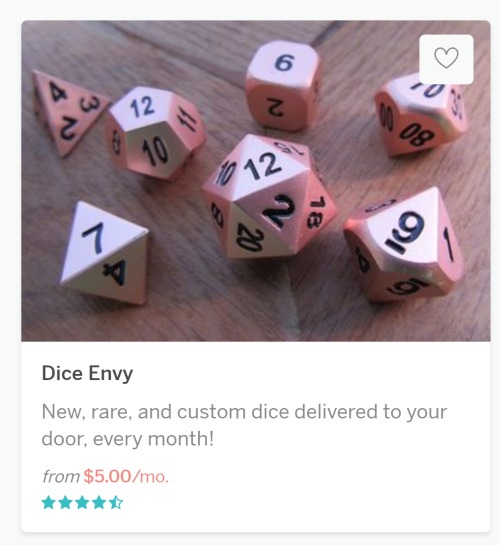
I thought they would all be food or clothing, but some of these categories are insane, 10 varietys of subscription boxes for witchy women?
I’m getting one for my dog!
FUTURE ME
They’re having a 30% off sale for mothers day. Thanks mom, for 30% of my book club box
ok guys i thought “yeah yeah one for everything but never me right” NO WRONG THERE ARE LITERALLY SO MANY I FOUND SO MANY I WANTED THAT I DIDN’T EVEN THINK I NEEDED!!!!! I DON’T WANT ANYTHING BUT THESE FOR EVERY FUTURE PRESENT GIVING OCCASION
Simply put, BPD is a disorder of emotional dysregulation, not mood dystregulation.
That’s not to say that we don’t get moody, but it is not in itself a symptom of BPD.
According to Dr. Marsha Linehan, BPD as a disorder has five key dysregulations:
Emotion Dysregulation: Emotion dysregulation means not managing your emotions in context. It happens when you must reduce or escape your emotions by not managing them, without regard to consequences. Emotional dysregulation can be rage, anxiety, depression, and not feeling validated.
Interpersonal Dysregulation: Interpersonal dysregulation is indicated by chaotic relationships and fears of abandonment.
Self Dysregulation: Self dysregulation means an unstable sense of self and a sense of emptiness.
Behavioral Dysregulation: Behavioral dysregulation is characterized by self-injury and impulsive behaviors (such as substance abuse and promiscuity).
Cognitive Dysregulation: Cognitive dysregulation is indicated by paranoia and dissociative responses that are made worse by stressful situations.
This article identifies four components of emotional dystregulation in particular:
Emotion sensitivity
Heightened and labile negative affect
A deficit of appropriate regulation strategies
A surplus of maladaptive regulation strategies
In plain language, this means:
We feel emotions very deeply and strongly, quite frequently.
We feel negative emotions (sadness, fear, anger) in a more intense way than most people, and yet these negative emotional states can cycle (change) very quickly.
We don’t have a whole lot of healthy ways of working through our emotions. Our skillset related to emotional processing is apparently a lot less developed than that of neurotupical people.
We have a whole lot of unhealthy ways of working through our emotions, which include things like substance abuse, suppression, self-harm, avoidance, and self-isolation, instead of developing healthier methods such as clear communication, excersizing, building a circle of trustworthy friends, and embracing new experiences.










 Charlie's Blog